Science
Science / How It Works
The short version
We do not extract dinosaur DNA. No one can — DNA does not survive deep time. What survives, in rare cases, is protein. Jurassic Meat begins with the trace molecular information left behind in fossils, uses it to reconstruct an extinct species' relevant biology by comparison with living relatives, and then grows real muscle from that biology in bioreactors. We are a cellular agriculture company. The only unusual thing about our process is where the starting information comes from.
The pipeline has six stages. Each took years. Each has a hard limit we respect.
1 · Recovering the past — palaeoproteomics
It started with a fossilized theropod tooth, bought years ago in the Saharan fossil trade of southeastern Morocco and sent to our laboratory on little more than a hunch.
DNA was never the goal, because DNA was never an option: across roughly ninety million years it degrades many times over into nothing. Proteins are different. Under the right mineral conditions, fragments of protein — short sequences of amino acids called peptides — can persist far longer than any nucleic acid, into the tens of millions of years. This is not speculative: the recovery of protein from dinosaur fossils is a real, published, and vigorously debated field.
What we recovered was not a blueprint. It was a handful of fragments. But those fragments were sequence — direct, physical evidence of how an extinct animal's proteins were built. That was enough to begin.
What we claim: trace peptide sequence, recovered from mineralized fossil. What we do not claim: intact ancient DNA, cloning, or "reading the genome off a bone."
2 · Reconstructing the genome — comparative inference
A few peptide fragments are not a genome. Getting from one to the other is the work of more than a decade, and it is computational, not archaeological.
Living species are not random; they are branches of the same tree. Birds and crocodilians are the closest living relatives of the lineages we work with, and the sequences they share — constrained by hundreds of millions of years of shared ancestry — let us bracket what an extinct relative's sequence most likely was. Our recovered peptides act as anchors and checkpoints against that inference: where a fragment and a prediction agree, confidence rises; where they disagree, the model is wrong and gets rebuilt.
The output is not "the" dinosaur genome. It is a working reconstruction of the specific biology we need — principally the genes governing muscle development, fiber type, fat, and flavor. We reconstruct what we intend to grow, and nothing more. We do not claim genomic completeness.
The recovered fragments and the living reference sequences they are compared against are maintained as a single, versioned internal peptide library. Every production cell line references a specific library release, and changes to the library are documented in the Peptide Library Release Notes. The methods and validation behind each release are described in a series of public Technical Reports.
3 · Building the cell line
With a reconstructed target in hand, we build a myogenic cell line — a stable, self-renewing population of muscle-precursor cells expressing the reconstructed Deinonychus sequence. This is standard cellular-agriculture practice, applied to a non-standard source. Birds and crocodilians are the reference we reconstruct against; they are not what we grow.
Where the reconstruction calls for it, we use established gene-editing techniques to express the specific reconstructed traits in a viable cellular background. This is the most sensitive work we do, and it is confined to our laboratory in Shenzhen, conducted under local research authorization and internal governance. We edit for muscle and flavor characteristics. We do not, and cannot, build an organism.
4 · Growth — serum-free media and bioreactors
From there, the process looks like the rest of the cultivated-meat industry, because it is.
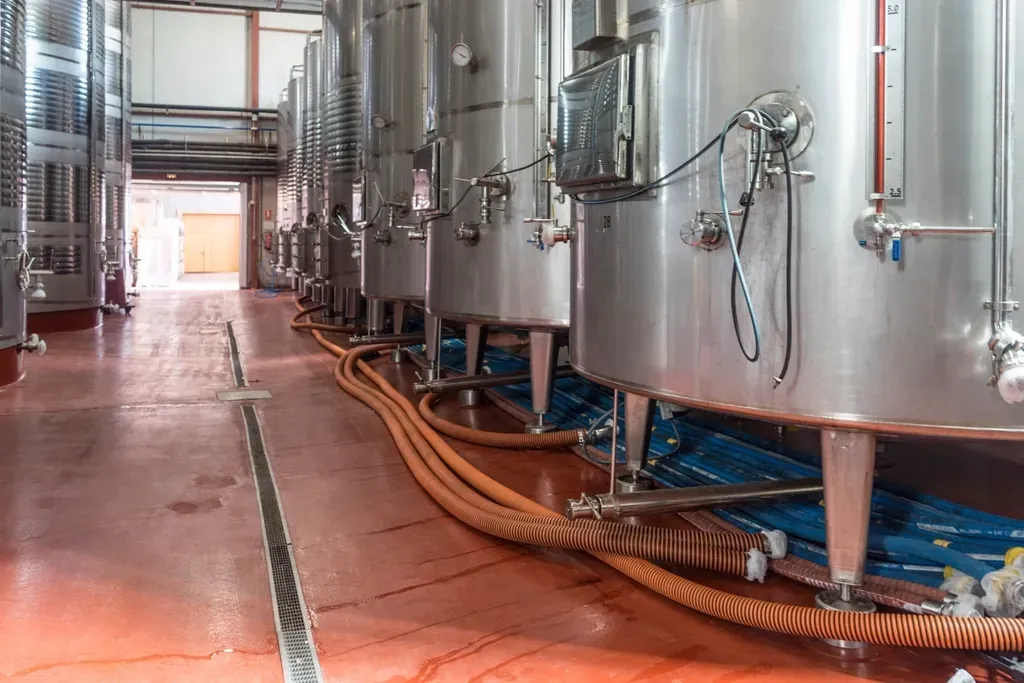
The cells proliferate in bioreactors — stainless-steel vessels that hold temperature, oxygen, and nutrients at the conditions muscle cells need to divide and mature. They are fed a serum-free medium: a defined nutrient solution containing no animal serum, which matters for cost, for consistency, and for the ethics of the thing. No animal is raised. No animal is harmed. Meat accumulates, cell by cell, in a tank.
This stage is where a science project becomes a company, because it is the stage that has to scale — from a few grams in a flask to quantities a kitchen can plate.
At our Pingshan production facility in Shenzhen, each production bioreactor runs a continuous culture campaign of 18 to 24 days, monitored 24 hours a day on rotating 12-hour shifts. Campaigns are numbered sequentially; Pingshan campaign 47 completed in November 2026. The facility is operated under a contract-operations agreement with Linjiang Bioprocess Operations Co., Ltd., whose operators and technicians work under the direction of our manufacturing and quality teams. We do not publish absolute yields. Campaigns are assessed against an expected window, and recent campaigns have performed within it.
5 · Structure — scaffolding, and the bone we cannot grow
Loose muscle cells are not a steak. To become a cut, cells need a three-dimensional structure to grow along — a scaffold. Scaffolding is real, central, and one of the harder problems in the field; the architecture of the scaffold is much of what separates a ground product from a whole cut.
It is also where we hit our most quoted limit: we cannot grow bone. Bone is not muscle, and nothing in our process produces it. So our bone-in products — the Deinonychus Bone-In Ribs — are matured on a porcine (pig-bone) scaffold: a real bone that gives the cut its structure, its shape, and the behavior chefs expect from bone-in meat. We did not invent a way around the constraint. We built the product around it.
6 · From tissue to cut
The last stage is culinary, not biological. Matured tissue is harvested, aged, trimmed, and finished into the cuts on our Products page — today, the Deinonychus Bone-In Ribs, Ground, Blood Curd, and Blended Sausage; in development, the Brachiosaurus Ribeye. The flavor is not engineered at this stage; it was decided much earlier, by the species' own reconstructed biology. Here it is simply revealed.
Before release, every lot passes two independent gates: food-safety testing, and evaluation by a trained sensory panel at our South San Francisco Culinary Center. Sensory windows are narrower than safety windows. Some lots meet safety standards and are still not released; those lots never leave the company. Each released pack carries a lot code that traces back to its production campaign.
A second pathway: recombinant proteins
Not everything we make is muscle, and not everything we make is grown in the same way.
Some products are built from a single reconstructed protein rather than whole tissue. The clearest example is the Blood Curd. Blood's color and its savory, metallic flavor come almost entirely from one molecule — the iron-bearing heme carried by hemoglobin. So rather than grow tissue, we produce recombinant Deinonychus hemoglobin by precision fermentation: the reconstructed dinosaur protein, brewed in engineered yeast (Komagataella phaffii, formerly Pichia pastoris). This is the same well-established method used to make the heme in plant-based meats, applied to a reconstructed sequence. The hemoglobin line is a separate fermentation train at Pingshan, and its limiting step is not fermentation but downstream purification capacity. Hemoglobin, not blood.
It is worth stating plainly: we do not, and cannot, draw blood from a dinosaur. There is no animal and no circulatory system. The Blood Curd is formulated from a brewed protein and set with food-grade gelling proteins — never bled. As with the porcine scaffold, the honesty about how it is made is part of why it can be trusted.
What we cannot do
We think the limits are the most credible thing about us, so we state them plainly:
- We cannot recover dinosaur DNA. It does not survive. Our starting material is ancient protein.
- We cannot grow a living animal. We grow muscle tissue, not organisms. No eggs, no embryos, no creatures.
- We cannot grow bone. Bone-in products use a porcine scaffold.
- We cannot draw blood from a dinosaur. There is no animal to bleed. Our Blood Curd is formulated from recombinant hemoglobin, not extracted.
- We do not have "the" genome of any extinct species. We reconstruct the specific biology we grow.
Everything we can do, we do carefully, under governance, in jurisdictions where the work is permitted. For more on that, see Safety & Ethics and Regulatory & Compliance.
Bringing the Taste of the Past, Tomorrow.